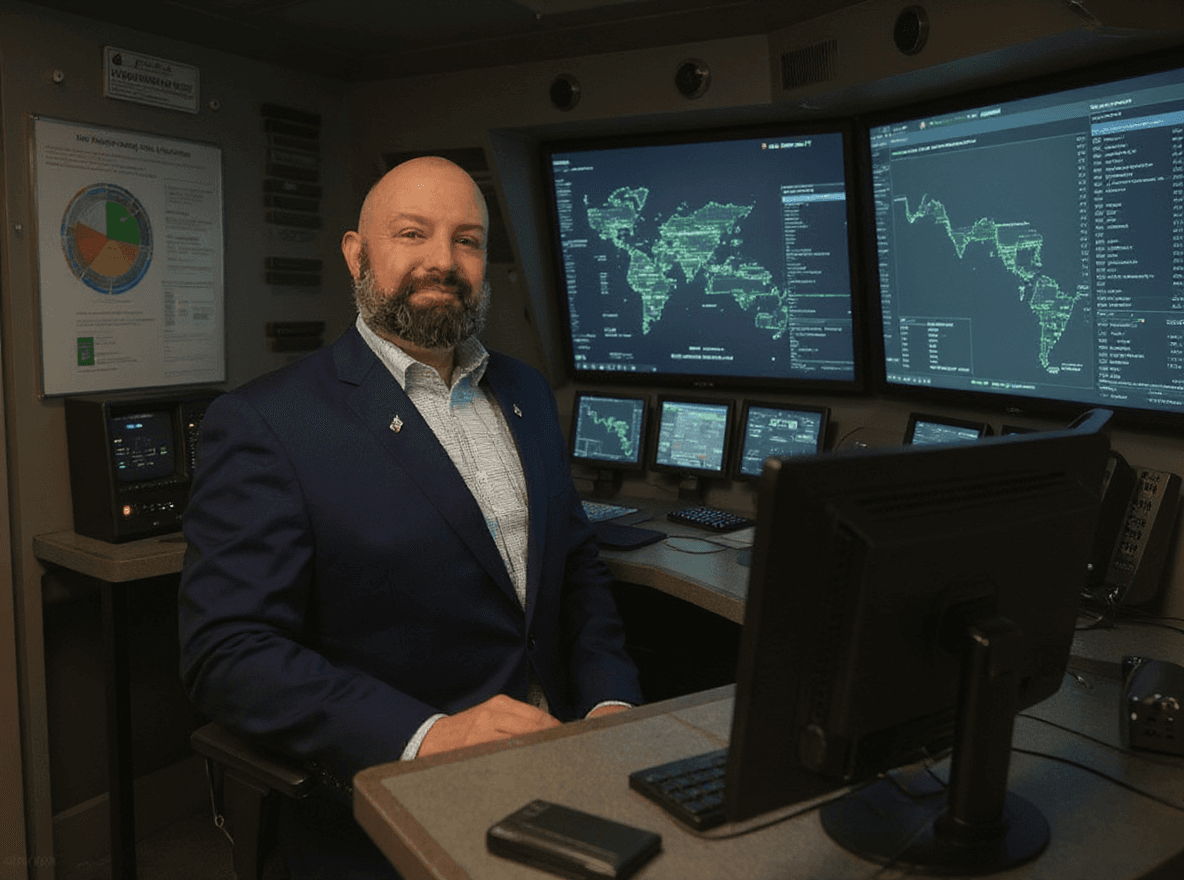
Nearly two decades of intelligence operations experience.
The founder of Grounded Vigilance spent the better part of two decades in the intelligence community — working in environments where situational awareness wasn't a nice-to-have, it was a survival skill. Operational deployments in multiple theaters. Threat analysis. Human intelligence. Signals intelligence support.
The transition to cybersecurity wasn't a pivot — it was a direct application of the same OPSEC disciplines to the digital environment. The threat model changed. The principles didn't.
Grounded Vigilance exists because the gap between what security professionals know and what everyday civilians know is enormous — and it doesn't have to be. These skills are teachable. They don't require a clearance. And they make a real difference.
“Alert, not anxious. Prepared, not paranoid.”
— The core philosophy behind every Grounded Vigilance training program
Operational Background
Some details remain classified. What can be shared speaks for itself.
Service Entry
U.S. Military — Intelligence Branch
Advanced Intel Training
██████████████████████████████████
Operational Deployments
Multiple theaters — threat analysis, HUMINT, SIGINT support
Cybersecurity & OPSEC
Applied operational security skills to digital environments
Grounded Vigilance
Translating nearly two decades of field experience into practical civilian training
Training Philosophy
Practical, not theoretical
Every technique taught can be applied immediately. No abstract concepts without real-world application.
Calibrated, not paranoid
Security awareness should reduce anxiety, not increase it. We teach calibrated responses to real risk.
Civilian-first framing
Military techniques are adapted for civilian context. Different environments, same principles.
Ready to train?
Join the next cohort. Seats are intentionally limited to maintain the quality of instruction.